Work at Height Regulations UK: What Every Employer Needs to Know in 2026
Falls from height remain the single biggest killer in UK workplaces. According to the Health and Safety Executive (HSE), falls from height accounted for 35 worker deaths in Great Britain between April 2024 and March 2025. More than a quarter of all workplace fatalities that year. Construction was the hardest-hit sector, with over half of all construction deaths attributable to falls from height over the past five years.
Despite decades of improved awareness and regulation, the numbers have plateaued. The message for employers is clear: compliance with Work at Height Regulations is not optional, and it is not a one-off exercise. In 2026, enforcement expectations are higher than ever. This guide explains exactly what the law requires, who it applies to, and what you need to do to keep your workers and your business protected.
What Is the Legal Framework?
The primary legislation governing work at height in the UK is the Work at Height Regulations 2005 (as amended), which implement the EU Temporary Work at Height Directive. The Regulations remain fully in force in 2026 and apply across all industries.
The overarching duty of care sits within the Health and Safety at Work etc. Act 1974, which places a general responsibility on employers to protect the health, safety and welfare of their employees and others who may be affected by their work activities.
The HSE defines work at height as any situation where a person could fall a distance liable to cause personal injury. This is broader than many employers realise — it includes:
- Working on roofs, scaffolding or elevated platforms
- Working at ground level near openings, excavations or edges
- Working on ladders or stepladders
- Working below ground level near pits or excavations
Critically, there is no minimum height threshold. Duration does not reduce risk either — a short-duration task on a ladder carries the same legal obligations as a full day on scaffolding. essential to ensure the system functions correctly and meets UK safety standards.
Who Does It Apply To?
The Regulations apply to employers, the self-employed, and anyone who controls work at height activities. This explicitly includes:
- Building owners and landlords
- Facilities managers who commission contractors to work at height
- Principal contractors on construction sites
- Sole traders and self-employed workers
If you are a facilities manager who brings in a window cleaning company or a roofing contractor, you are a duty holder under these Regulations. You cannot pass the legal responsibility entirely to the contractor.
Key Employer Duties Under the Regulations
The HSE sets out a clear hierarchy of control that employers must follow. In order of priority:
- Avoid work at height wherever possible, ask whether the task can be done from the ground
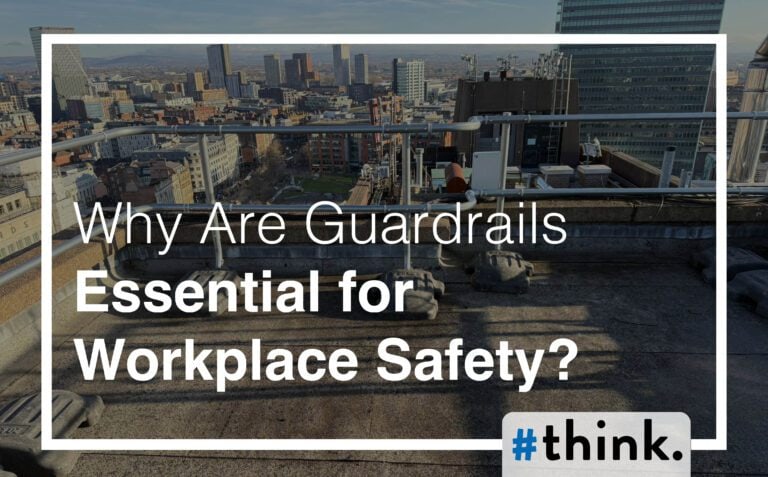
- Prevent falls – use collective protection measures such as guardrails, edge protection, or working platforms
- Minimise the consequences, if falls cannot be prevented, use fall arrest systems, safety nets or airbags to reduce the impact
Beyond this hierarchy, specific duties include:
Falling objects: measures must be in place to prevent tools or materials falling and injuring people below
Planning and supervision: all work at height must be properly planned, appropriately supervised, and carried out by competent people
Risk assessment: a suitable and sufficient risk assessment must be completed before any work at height begins
Equipment selection: equipment must be suitable for the task, properly maintained, and regularly inspected
Training and competence: workers must be trained and competent for the tasks they are performing
Fragile surfaces: specific precautions are required when working on or near fragile roofs or skylights
What Has Changed in 2026?
The Work at Height Regulations 2005 themselves have not been amended. However, how they are enforced and interpreted by the HSE has continued to evolve, and employers need to be aware of the shift in expectations.
The key change is that compliance is no longer viewed as a one-off installation exercise. A business that fitted guardrails five years ago and has never revisited them is not considered compliant. In 2026, the HSE expects duty holders to demonstrate:
- Up-to-date risk assessments that reflect current access patterns and building changes
- Documented inspection records for all fall protection systems
- Evidence of ongoing worker training, not just induction-level instruction
- Rescue plans in place wherever fall arrest systems are used
- Regular review of whether fall prevention measures remain appropriate
Inspectors have increasingly found that poor or missing documentation is treated as non-compliance, even where physical systems appear to be in good condition. If you cannot produce inspection certificates, training records and method statements, you are at risk.
What Are the Consequences of Non-Compliance?
The consequences of failing to meet your obligations can be severe:
- Prohibition notices: the HSE can issue an immediate stop-work order where serious risk is present
- Improvement notices: requiring specific changes within a set timeframe
- Prosecution: under the Health and Safety at Work Act 1974, employers and individuals can face criminal prosecution, with fines running into millions of pounds and potential imprisonment for the most serious cases
- Civil claims: injured workers can pursue compensation claims, with settlements often running to hundreds of thousands of pounds
- Reputational damage: prosecution details are published publicly by the HSE
The HSE’s enforcement posture has not softened. Recent prosecution trends confirm that where basic precautions have been ignored, particularly on repeat offenders – the regulator will act decisively.
Practical Steps for Employers in 2026
If you are unsure whether your current arrangements are compliant, a good starting point is to ask:
- Have all areas of our building where work at height occurs been identified and risk-assessed?
- Have our fall protection systems been inspected within the last 12 months by a competent person?
- Are all workers who access the roof or work at height trained and supervised appropriately?
- Do we have a rescue plan in place for anyone using fall arrest equipment?
- Are our records for inspection certificates, training logs, method statements up to date and accessible?
If the answer to any of those questions is no, or not sure, you should seek specialist advice promptly.
How Think Worksafe Can Help
At Think Worksafe, we design, install and certify critical access and height safety systems for commercial, industrial and public sector buildings across the UK. From permanent guardrail systems and roof walkways to fall restraint lines and abseil anchor systems, everything we install is designed to meet current UK regulatory standards and comes with full certification documentation.
We also offer free site surveys, giving your building a comprehensive assessment of its height safety provision and identifying any compliance gaps before the HSE does.
If your building’s height safety arrangements haven’t been reviewed recently, now is the time.
Sources & Further Reading
HSE – The Law on Work at Height
HSE – Work at Height: A Brief Guide (INDG401)
HSE: work-related fatal injury statistics
The Work at Height Regulations 2005 – legislation.gov.uk
Shoosmiths – Work at Height Regulations: Practical Steps for Compliance
Book Your Free Site Survey
Not sure what the Work at Height Regulations mean for your site? Explore our height safety consultancy or complete the form below and our specialists will get back to you within one working day.