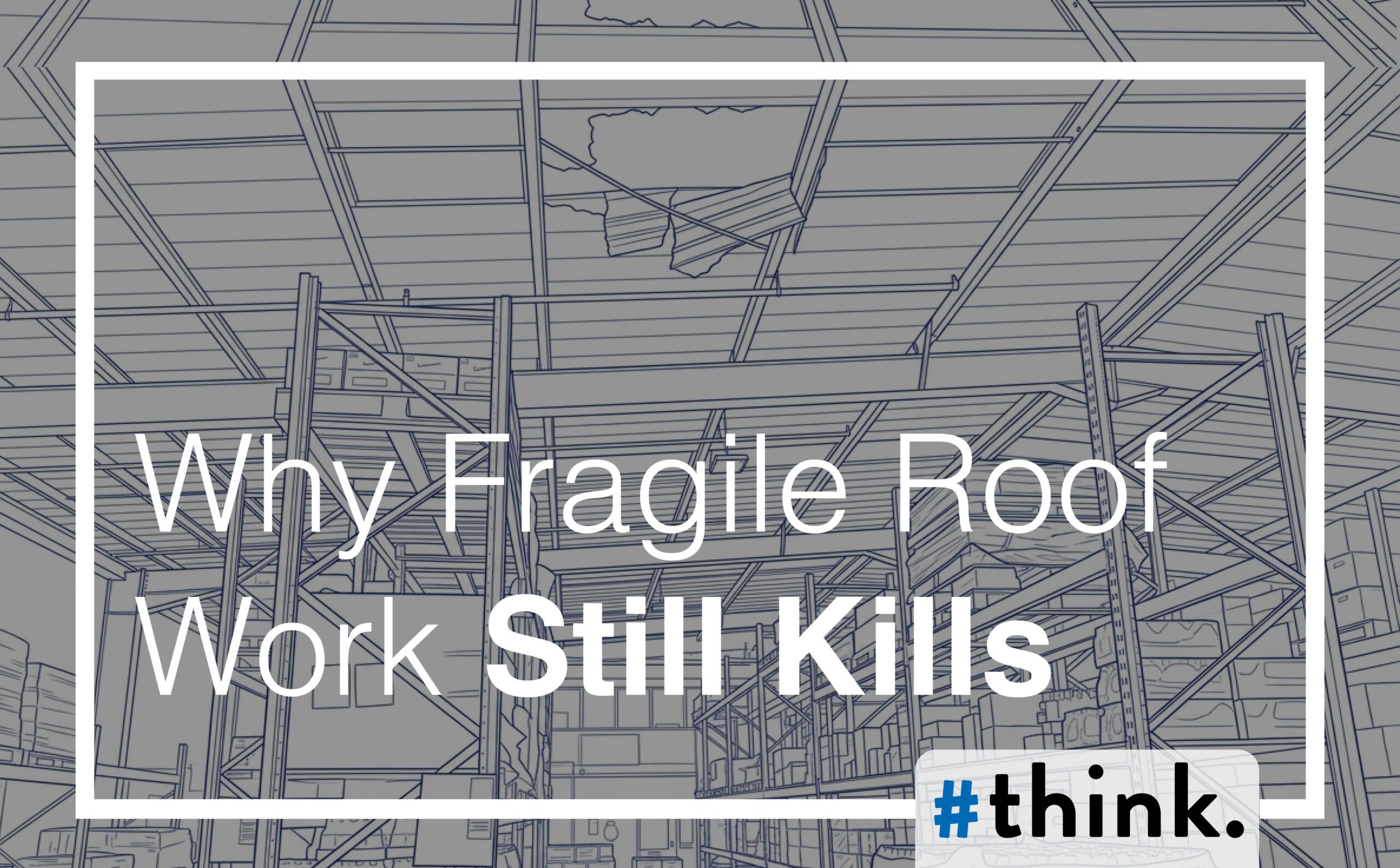
Why Fragile Roof Work Still Kills: The West Yorkshire Skylight Fall That Should Never Have Happened
A scaffolder in West Yorkshire fell more than six metres through a warehouse roof skylight in an incident that has since been described by the Health and Safety Executive as “harrowing”, and entirely avoidable.
CCTV footage, released by the HSE as part of enforcement action, captures the moment James Cranswick, 26, stepped onto a skylight while working on the roof of a warehouse at Acre Mills in Keighley. Seconds later, he fell through it, landing on a pallet truck before hitting the concrete floor below. He suffered head lacerations, a broken arm and a broken leg. He was, in the words of the HSE, lucky to be alive.
The footage makes for uncomfortable viewing. But it is exactly the kind of uncomfortable viewing that those managing work at height need to see.
What Went Wrong
Mr Cranswick was part of a team employed by a scaffolding contractor to install temporary scaffolding edge protection at the warehouse. The work was straightforward in scope, but the planning behind it was not fit for purpose.
An HSE investigation found that both the scaffolding contractor and the principal contractor had failed to properly plan, manage and monitor the work being carried out by scaffolders on the roof. There were no measures in place to prevent workers from falling from the roof edge or through fragile sections of the roof. Critically, the skylights were described as being almost invisible to Mr Cranswick, who had no way of knowing the fragile elements were there.
Both companies pleaded guilty to breaching the Construction (Design and Management) Regulations 2015: the scaffolding contractor under Regulation 15 (contractor duties to plan, manage and monitor) and the principal contractor under Regulation 13 (principal contractor duties). The scaffolding contractor was fined £26,000 and ordered to pay £2,866 in costs at Leeds Magistrates’ Court on 4 June 2026; the company has since gone into liquidation. The principal contractor was fined £53,300 and ordered to pay £3,167 in costs.
Know Your Fragile Surfaces These materials cannot safely support a person’s weight. Many become harder to identify with age — discolouring, painting over, or corroding until they are almost invisible. Treat all of them as hazardous until physically confirmed safe.
A Risk That Is Well Understood and Still Ignored
Falls through fragile roofs are not a new problem. The dangers associated with skylights, fragile roof panels and unprotected roof surfaces have been documented and legislated against for decades. The HSE’s own guidance on roof work sets out a clear hierarchy for those in control of work at height:
- Avoid the need to access fragile roofs wherever possible.
- Where access cannot be avoided, put suitable protection in place to prevent falls through fragile materials.
This is not complex. It does not require specialist knowledge or expensive equipment to get right. It requires a genuine risk assessment, a plan, and someone with authority to enforce it on the day.
None of that happened at the Keighley warehouse.
What This Means for Your Business
If your operations involve any work on or near roofs, including installing edge protection, inspecting industrial units, or accessing structures with older roofing materials, this case is a direct reminder of your responsibilities.
Before any operative sets foot on a roof, the following must be in place:
A thorough pre-work survey. Roofs must be inspected before work begins to identify all fragile elements, including skylights, rooflights, corroded sheeting and asbestos panels. What appears solid from the ground, or from a distance, may not be.
A clear method statement. The plan for how the work will be carried out must account for fragile areas. It is not sufficient to tell operatives to “be careful.” Physical barriers, crawling boards, or covers must be specified and used.
Active supervision. Planning a job properly is not the same as managing it properly. Someone on site must be responsible for ensuring that the plan is followed.
Documented risk assessment. A written record protects your workers and your business. If something does go wrong, you will need to demonstrate that you identified the risks and took appropriate steps.
The Regulator’s Position
HSE Inspector Shauna Halstead was unequivocal following the prosecution:
“Mr Cranswick is lucky to be alive after this incident. His fall was wholly avoidable; the risks associated with work on, or around fragile surfaces are well-known, and HSE guidance is available to assist companies in complying with the law. Everyone working in construction should be aware that HSE will not hesitate to take enforcement action where roof work is not properly managed, as workers should not be needlessly put in harm’s way.”
The enforcement of CDM 2015 in cases like this sends a clear message: the duty to plan, manage and monitor is not a box-ticking exercise. It is a legal obligation with real consequences when it is not met.ot a box-ticking exercise. It is a legal obligation with real consequences when it is not met.
If you are unsure whether your current procedures are adequate for work at height or if you would like support developing method statements, risk assessments or safety management systems Think WorkSafe can help. Our team works with contractors across a wide range of sectors to ensure that work at height is managed safely and in full compliance with current legislation.
Get in touch with our team to find out more.
Further Reading
The following resources are recommended for anyone responsible for managing work at height, particularly on or near fragile roofs.
HSE — Roof Work Safety Topics The HSE’s dedicated roof work guidance page covers the main causes of death and injury, equipment requirements, and the specific duty to treat all roofs as fragile until confirmed otherwise by a competent person. hse.gov.uk/construction/safetytopics/roofwork.htm
HSE — GEIS5: Fragile Roofs — Safe Working Practices The HSE’s core document on fragile roof work. It sets out the hierarchy of controls and practical guidance for those planning and managing access to fragile surfaces. Available as a free PDF via the HSE website. hse.gov.uk
Work at Height Regulations 2005 — Full Text Regulations 9 and 10 deal specifically with fragile surfaces — including the duty to avoid access wherever possible, the requirement for suitable platforms and coverings where access cannot be avoided, and the obligation to post warning signs. Essential reading for duty holders. legislation.gov.uk/uksi/2005/735
Construction (Design and Management) Regulations 2015 — Full Text Regulation 15 — the provision under which both companies in this case were prosecuted — places a duty on contractors to plan, manage, monitor and coordinate construction work, including work at height. legislation.gov.uk/uksi/2015/51
NASC SG4:22 — Preventing Falls in Scaffolding and Falsework The National Access & Scaffolding Confederation’s technical guidance document on fall prevention. It applies the Work at Height Regulations hierarchy specifically to scaffolding erection sequences and is considered the industry standard for scaffolding contractors. nasc.org.uk
HSE Press Office — Skylight and Fragile Roof Prosecutions The HSE press office publishes enforcement outcomes. Searching for “skylight” returns a range of comparable cases — useful background for understanding how consistently the regulator pursues failures in this area. press.hse.gov.uk/?s=skylight
Make Fragile Roof Areas Safe Before the Next Job
Think Worksafe designs and installs guardrail and edge protection and fall restraint systems that make fragile roofs and skylights safe to work near. If your site has roof lights or fragile surfaces, a free survey will tell you exactly what the regulations require.