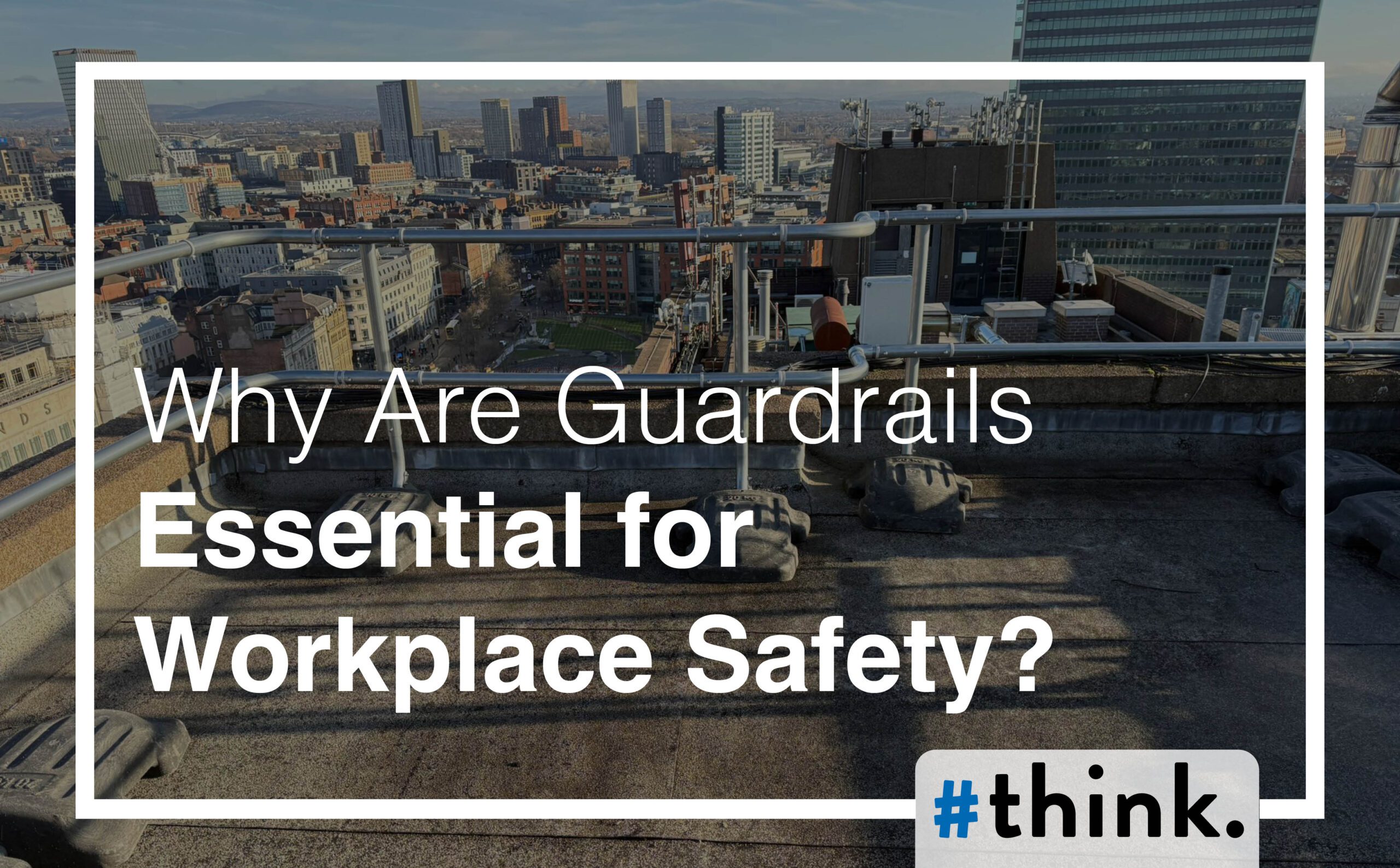
What Are Guardrail Systems and Why Are They Essential for Workplace Safety?
Falls from height remains one of the leading causes of serious injury and fatalities in the workplace, particularly across construction, maintenance, roofing and industrial environments. Despite advances in training and personal protective equipment (PPE), the risks associated with working at height are still significant. This is where guardrail systems play a critical role. As a form of collective fall protection, guardrail systems are one of the most effective and reliable ways to prevent falls and protect workers.
What Are Guardrail Systems?
Guardrail systems are physical barriers installed at the edges of roofs, platforms, walkways and other elevated areas to prevent people from falling. A standard guardrail system typically consists of a top rail, mid-rail, and sometimes a toe board (where there is no parapet and a risk of objects falling from height), all designed to create a secure edge protection solution.
Unlike PPE such as harnesses, guardrail systems do not rely on individual user behaviour. Once installed correctly, they provide continuous protection for anyone working in the area, making them a preferred solution for many work-at-height scenarios.
Guardrail systems can be temporary or permanent, depending on the nature of the project. Temporary systems are often used on construction sites or short-term maintenance works, while permanent systems are integrated into building designs for ongoing access and safety.
Types of Guardrail Systems
There are several types of guardrail systems available, each designed to suit different environments and applications:
- Temporary Guardrail Systems
Commonly used on construction sites, these systems are quick to install and remove without permanently altering the structure. They are ideal for short-term works where edge protection is required only during the project lifecycle. - Permanent Guardrail Systems
These are fixed installations designed for buildings that require regular access for maintenance, inspection or cleaning. Permanent guardrails provide long-term compliance and reduce the need for repeated temporary installations. - Freestanding / Counterweighted Systems
Often used on flat roofs, these systems do not require penetration of the roof surface, helping to preserve waterproofing while still providing robust edge protection.
Choosing the right system depends on factors such as roof type, duration of work, load requirements and regulatory compliance.
Why Are Guardrail Systems Essential for Workplace Safety?
1. Preventing Falls at Source
Guardrail systems act as a physical barrier, stopping falls before they can occur. This aligns with the hierarchy of controls, which prioritises eliminating or controlling risks at the source rather than relying on individual actions. In simple terms, a properly installed guardrail removes the fall risk altogether.
2. Collective Protection Over Individual PPE
One of the biggest advantages of guardrail systems is that they offer collective protection. Unlike harnesses or lanyards, which require correct fitting, training and user compliance, guardrails protect everyone equally workers, supervisors, and visitors alike.
This significantly reduces the likelihood of human error and ensures consistent safety across the site.
3. Compliance with Work at Height Regulations
In the UK, the Work at Height Regulations require employers to take suitable and sufficient measures to prevent falls. Where work at height cannot be avoided, collective protection such as guardrail systems should be prioritised over personal fall protection.
Installing compliant guardrail systems helps duty holders demonstrate that they have taken appropriate steps to manage risk and meet legal obligations.
4. Improved Efficiency and Productivity
Safety solutions should not slow a project down. Guardrail systems allow workers to move freely and confidently within a protected area without the need to clip on, adjust equipment or manage anchor points.
This ease of movement often leads to increased productivity, fewer interruptions and smoother workflows particularly on busy construction or maintenance sites.
5. Reduced Risk of Serious Injury or Fatality
The consequences of a fall from height can be catastrophic. Guardrail systems provide a constant layer of protection, dramatically reducing the risk of serious injury or death. Beyond the human cost, this also helps organisations avoid project delays, legal action and reputational damage.
When Should Guardrail Systems Be Used?
Guardrail systems are suitable for a wide range of applications, including:
- Roof edge protection
- Roof access hatches
- Excavations
- Pits & shafts
- Mezzanines and raised platforms
- Scaffolding and temporary works
- Industrial plant walkways
- Loading bays and open edges
They are particularly valuable where multiple people need access to an elevated area or where work is ongoing over an extended period.
Conclusion
Guardrail systems are a fundamental component of effective workplace safety, especially when working at height. By providing robust, collective protection, they eliminate fall risks at source, support regulatory compliance and create safer, more efficient working environments.
Whether used temporarily on a construction site or permanently as part of a building’s design, guardrail systems are not just a safety feature they are an essential investment in protecting people, projects and businesses. If you’re planning work at height, considering the right guardrail system from the outset can make all the difference.