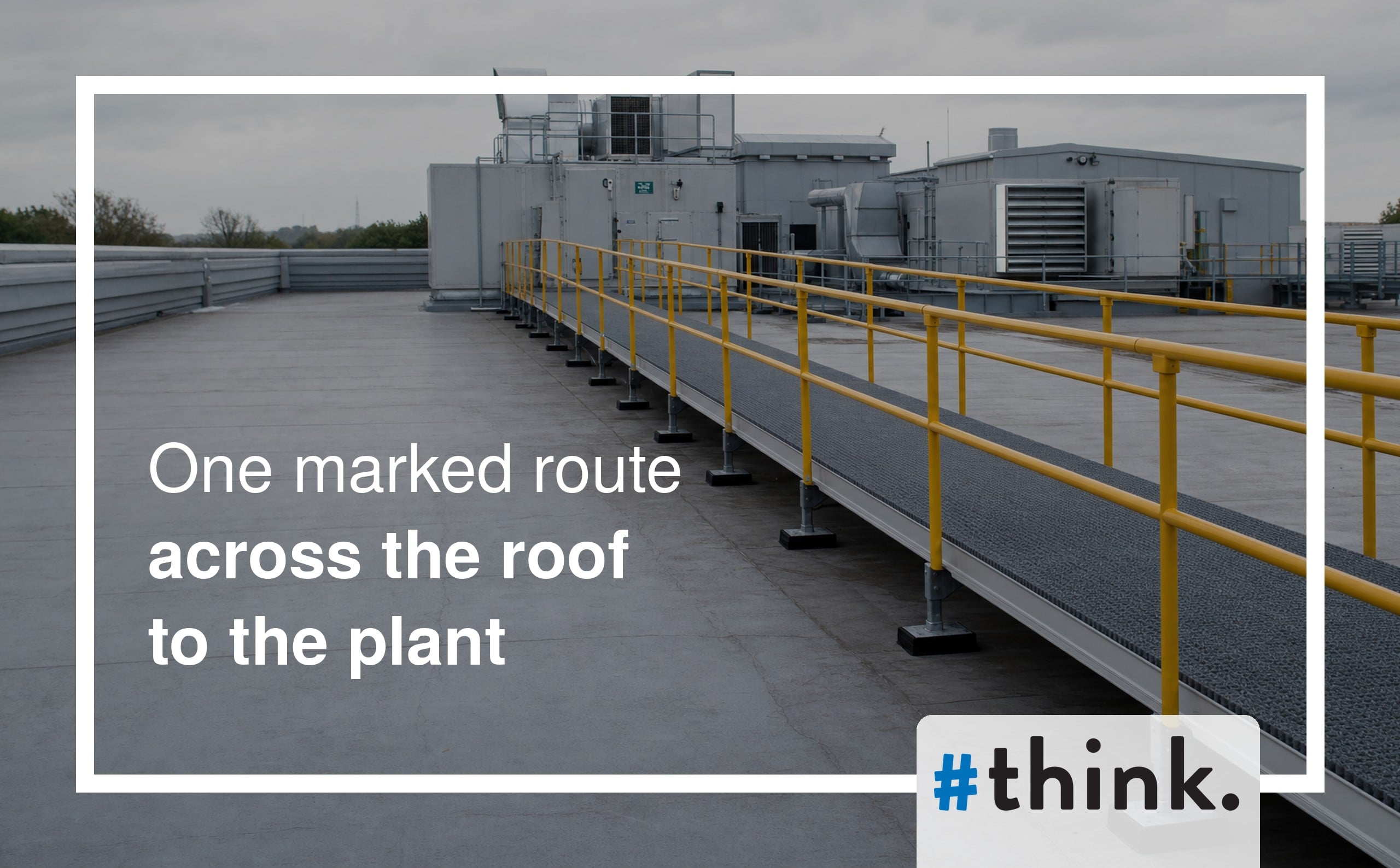
When Do You Need a Roof Walkway?
A roof walkway looks like a luxury until you understand what it is doing. It defines where people walk, keeps their feet off surfaces that were never designed to take footfall and provides grip in the wet and frost that British roofs live with. The question is not really whether walkways are nice to have. It is whether your roof has regular foot traffic, and if it does, what is protecting the people and the roof from each other.
When a walkway earns its place
Traffic
regular routesPlant, gutters and PV visited on a schedule create a de facto path that deserves protecting.
Surface
roof protectionMembranes and coated sheets are damaged by footfall. Walkways spread and isolate loads.
Grip
slips and fallsWet, mossy or frosted roofs are genuinely slippery. Anti-slip surfaces remove the risk.
What the Regulations Expect
The Work at Height Regulations require every place where people work at height, including the route to it, to be safe. On a roof that means a defined access route that keeps people away from edges and fragile areas wherever practicable. A demarcated walkway is the cleanest way to evidence that duty: it shows an inspector, an insurer and every contractor exactly where safe passage lies. Combined with guardrail on exposed sections or a safety line system alongside, the route itself becomes the control.
Signs Your Roof Needs One
- Maintenance visits happen monthly or more: air handling plant, gutter runs, flues or a PV array
- A visible worn track already exists across the membrane or through the roof coating
- The route to plant passes near fragile roof lights, covered in our guide to skylight fall protection
- The roof is pitched or profiled metal where footing is unreliable, where proprietary walkways with integrated guardrail solve both problems at once
- Roof warranty conditions restrict trafficking the covering, which walkways formally address
Key takeaway: a walkway system also protects the asset itself. Punctured membranes and crushed insulation from repeated footfall cause leaks that cost far more than the walkway that would have prevented them.
Materials and Design
Modern systems are typically GRP or aluminium, chosen for the roof type. GRP grating suits membrane and standing seam roofs, spreading load without fixings that pierce the covering. Aluminium modular systems suit profiled metal roofs and can step over ridges and changes in level, with integrated handrail where the route runs near an edge. Layout is the design skill: the shortest compliant route between access point and every maintenance position, not simply a straight line.
Roof Walkway FAQs
Are roof walkways a legal requirement?
Not by name. The legal duty is safe access for work at height. Where regular roof traffic exists, a designated walkway is the recognised way to meet that duty, so surveyors and auditors increasingly expect one.
Do walkways damage the roof covering?
Quite the opposite when specified correctly. Systems for membrane roofs sit on load-spreading pads without penetrations, and systems for metal roofs clamp to seams or fix through existing profiles with sealed detail.
Can a walkway include fall protection?
Yes. Walkways combine naturally with roof edge protection guardrail on exposed runs or with a horizontal safety line alongside, giving a single route that handles footing, demarcation and fall protection together.
Do walkways need inspecting?
Yes, on the same cycle as your other height safety equipment. Checks cover fixings, grating condition, movement and any guardrail or lifeline components attached to the route.
Design the Route Before Someone Improvises One
Think Worksafe designs and installs roof walkway systems in GRP and aluminium across the UK, engineered for your roof build-up and combined with guardrail or safety lines where the route needs them. A free survey maps your maintenance traffic and returns a walkway layout with costs.