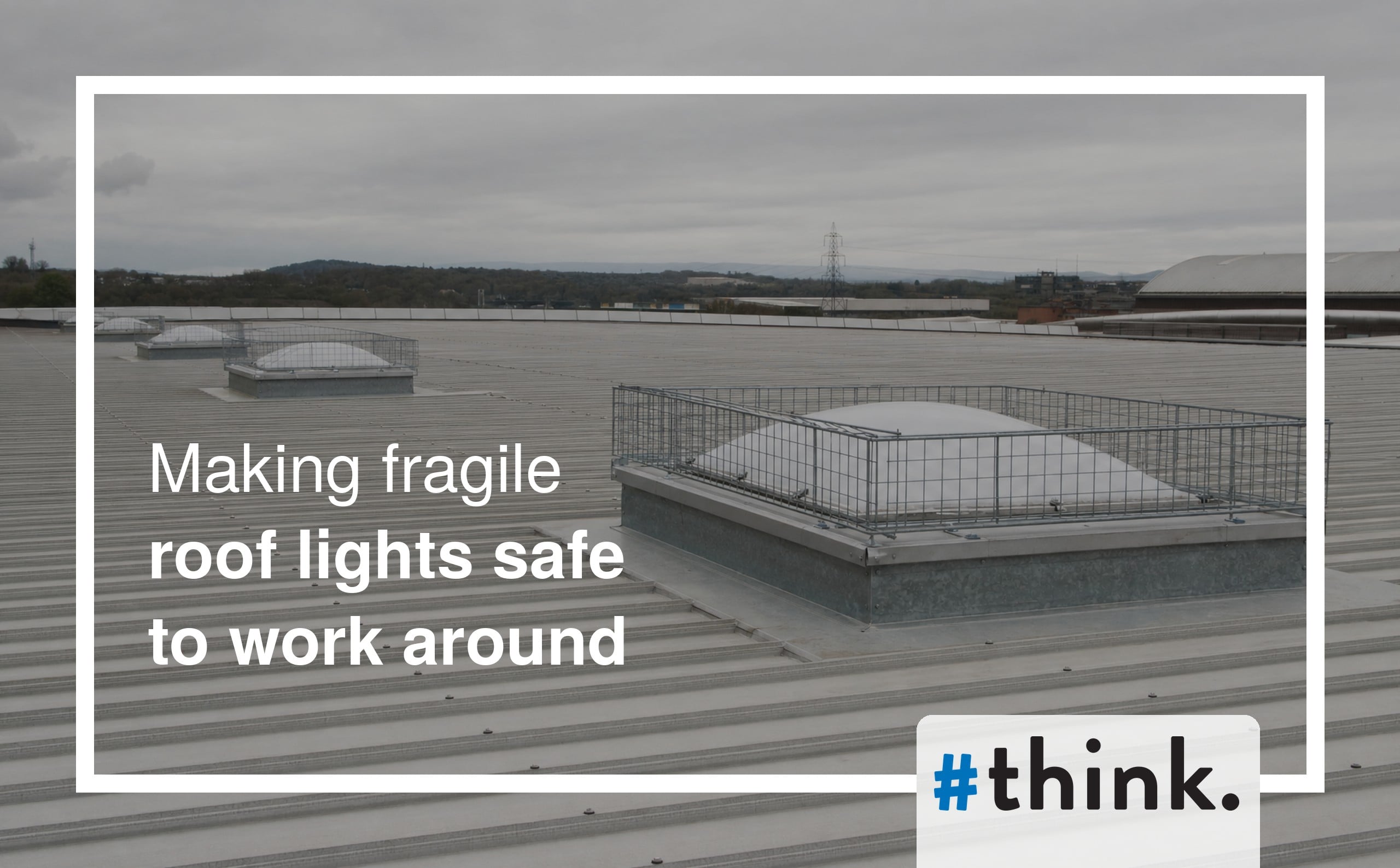
Skylight Fall Protection: Making Fragile Roof Lights Safe
Roof lights let daylight into buildings and people out through the roof. That is the brutal truth behind years of HSE fatality reports: skylights and fragile roof panels are involved in a large share of fatal falls, usually because they look solid, sit flush with the surrounding roof and give way without warning. Protecting them properly is one of the highest-value safety improvements a building owner can make.
Skylight protection options
Tap an option to see what it involves.
Coversover the light
Proof-load rated mesh covers fitted over each roof light, protecting without blocking daylight.
Routesaway from the light
Demarcated walkways that keep foot traffic clear of fragile areas entirely.
Why Roof Lights Are So Dangerous
Age is the main culprit. GRP and polycarbonate roof lights lose strength dramatically as they weather, and a panel that took a person’s weight when installed can fail under a glance of contact twenty years later. Dirt and paint make old lights near invisible against the roof, and on profiled metal roofs the fragile panel sits in the same plane as walkable sheets. The Work at Height Regulations single out fragile surfaces for exactly this reason: no one may pass or work near one unless protection is in place. We looked at the human cost in our analysis of a fatal skylight fall in West Yorkshire.
Choosing the Right Protection
- Skylight covers suit roofs where work happens close to the lights themselves. Purpose-made mesh covers rated for the loads involved protect permanently while passing daylight.
- Guardrail barriers suit larger openings and clusters, or lights beside a walkway route. Free-standing counterweighted systems avoid penetrating the roof covering.
- Walkways with demarcation suit roofs where the real answer is keeping traffic away from fragile zones altogether, covered in roof walkway systems.
- Netting below is the mitigation of last resort for work phases, catching a fall rather than preventing it.
Key takeaway: warning signs and painted markings are not protection. They discharge no duty on their own because they stop nobody. Physical protection or physical separation is what the regulations expect.
Skylight Fall Protection FAQs
Are all roof lights fragile?
Treat them as fragile unless proven otherwise. Some modern units are rated as non-fragile to ACR standards when new, but weathering erodes that rating. Unless documentation confirms current non-fragile status, the safe assumption is fragile.
Is it a legal requirement to protect skylights?
The Work at Height Regulations prohibit working on or near fragile surfaces without measures to prevent falls through them. If people access your roof and fragile lights are present, protection in some form is required.
What do skylight covers cost?
Far less than people expect, particularly fitted in batches during one visit. Cost scales with size and quantity. A survey producing a fixed price per roof is the practical starting point.
Do covers or barriers need maintenance?
An annual check alongside your other roof safety equipment covers fixings, corrosion and any counterweight systems. Covers should also be checked after storms and any roof works.
Make Your Fragile Areas Safe
Think Worksafe surveys roofs across the UK and installs the full range of skylight protection: rated covers, fixed and free-standing guardrail and walkway systems that route traffic clear of fragile zones. A free survey identifies every fragile area on your roof and prices the protection that fits how the roof is actually used.